Photo by FBO Media via Pexels
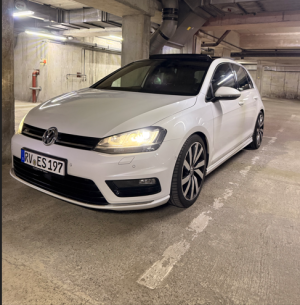
You notice the wheels first.
Then the ride height. The larger brakes. Maybe a steering wheel or trim piece you don’t remember seeing in the brochure.
Nothing screams for attention. Nothing looks accidental. The car simply appears more complete than the standard version.
That is OEM+ at its best.
A good OEM+ build doesn’t make people ask, “What have you done to it?”
It makes them ask, “Did this come from the factory?”
The Definition Everyone Gets Wrong
OEM+ is often treated as a parts-bin exercise: fit wheels from a higher-spec model, add an R-line bumper, install some Audi seats and call it finished.But genuine parts alone don’t make a build OEM+.
The philosophy is more important than the badge stamped on each component. Every change should preserve the car’s original identity while improving its appearance, performance or usability.
Aftermarket parts can belong in an OEM+ build. Factory parts can ruin one.
The real test is simple:
Does the modification feel like a natural extension of the car—or does it feel added to it?
The First Modification Isn’t Exciting
Before the wheels, springs and software, there is maintenance.A tired suspension will not become better because it sits lower. A poorly running engine does not need more boost. Fresh paint cannot hide brakes that vibrate or coolant disappearing from the expansion tank.
The strongest OEM+ projects usually begin with the least glamorous work:
- repairing leaks;
- replacing worn bushes and mounts;
- refreshing dampers;
- servicing the engine and transmission;
- fitting quality tyres;
- making every factory feature work properly.
There is no point chasing the perfect stance if the car drives like it has already given up.
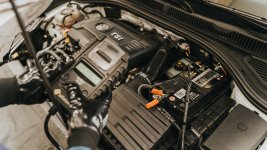
Photo by Daniel Andraski via Pexels
Wheels: The Easiest Place to Get It Wrong
Wheels define an OEM+ build more than almost any other component. They are also where restraint disappears first.Going larger is easy. Choosing the right size is harder.
Diameter is only part of the equation. Width, offset, tyre profile, brake clearance and overall weight determine whether the setup actually works. The wheel should fill the arch without making the car rub, tramline or crash over every imperfection.
VAG’s own catalogue offers plenty of tempting options from higher trims and related platforms. But just because a wheel bolts on doesn’t mean it belongs.
The correct setup should look intentional from every angle—and still allow the car to be driven normally.
If every speed bump becomes a strategy meeting, something has gone wrong.
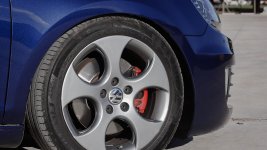
Photo by Sofía Nuñez via Pexels
Low Enough, Not As Low As Possible
A modest drop can transform a VAG car. It closes the arch gap, sharpens the proportions and makes the wheels look like they finally belong.The key word is modest.
Quality springs with suitable dampers—or a properly adjusted coilover setup—can improve body control without destroying ride quality. Excessive lowering usually brings compromised geometry, limited suspension travel and a car that looks its best only while parked.
An OEM+ car should remain composed when the road stops being smooth.
It should clear everyday obstacles, carry passengers and survive a long journey without punishing everyone inside. Usability is not the enemy of style. It is part of the brief.
More Power Should Feel Like Factory Power
Modern VAG engines often respond well to software, which makes extra power one of the most attractive upgrades.It also makes chasing numbers dangerously easy.
An OEM+ tune should feel like the engine was always capable of more—not like it is constantly trying to prove something. Power delivery should remain smooth, predictable and usable. Temperatures, fuel quality, service history and supporting hardware matter more than a screenshot from a dyno session.
On DSG-equipped cars, the engine and transmission should be treated as one system. More torque without considering gearbox behaviour, clutch limits and calibration is not a complete upgrade.
The same principle applies to the exhaust.
A little more character under load? Perfect.
Constant drone at motorway speed? That is not a factory improvement. That is a subscription to a problem you installed yourself.
Chassis Before Bragging Rights
More power gets attention. Better tyres, brakes and suspension make the car better.A quality tyre can transform steering, braking and traction without adding a single horsepower. Fresh suspension components can restore precision that disappeared so gradually the driver never noticed. Better pads and fluid may deliver more useful stopping performance than the largest brake kit available.
Factory brake conversions from more powerful VAG models can fit the OEM+ brief beautifully—but only when engineered as a complete system.
Disc size is not the whole story. Caliper compatibility, brake balance, wheel clearance and pedal feel all matter.
The goal is not to build an impressive specification sheet.
The goal is to build confidence from behind the wheel.
The Interior Is Where You Experience the Build
Exterior modifications are for everyone else. The cabin is for the owner.That makes the interior one of the best places to apply OEM+ thinking.
A better factory steering wheel, supportive seats, an updated infotainment system or subtle trim from a higher specification can modernise the car without changing its personality.
But execution matters.
No warning lights. No loose trim. No exposed wiring. No switches that look correct but don’t work. If a factory feature is added, it should behave like a factory feature.
The best interior upgrade is the one a passenger assumes was always there.

Photo by Ardit Mbrati via Pexels
So Where Does OEM+ End?
There is no universal limit.One owner might keep the exterior completely standard while improving the suspension, brakes and software. Another might build a car with wider wheels, a full performance interior and components borrowed from several VAG platforms.
Both can be OEM+.
The philosophy ends when the modifications stop working together.
Huge wheels hiding small brakes. Aggressive aero on factory ride height. Big power with neglected cooling. Premium interior parts surrounded by broken switches and worn trim.
Each modification might be defensible on its own. Together, they tell no coherent story.
A strong build has direction. Every part supports the same idea.
The Invisible Build Sheet
OEM+ is not about making the car impossible to notice. It is about making the modifications difficult to separate from the car itself.That usually requires more research, more patience and fewer impulse purchases. Sometimes it means selling a perfectly good part because it doesn’t suit the final direction. Sometimes it means choosing the smaller wheel, the quieter exhaust or the less aggressive drop.
Restraint rarely wins the most attention online.
But it tends to age much better.
The best OEM+ build is not the one with the longest modification list. It is the one that feels finished—more focused than stock, more personal than stock, but still unmistakably the car it started as.
Not factory.
What the factory should have built.
Where do you draw the OEM+ line? Which modification takes a build from factory-plus to simply modified?