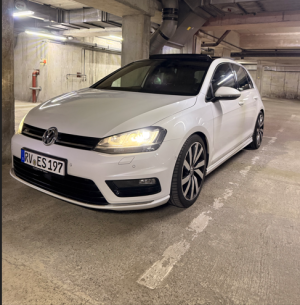
Photo by Lilly Grace via Pexels
Front-wheel drive, until it isn't.
That's the honest description of how most all-wheel-drive Volkswagen Group cars actually work — 4Motion on a Golf R, quattro on a transverse-engine Audi, or AWD on a CUPRA Formentor. Unlike Audi's original mechanical quattro system, these cars send power to the front wheels by default and only engage the rear axle when the system decides it's needed. The component that makes that decision is called the Haldex coupling, and understanding it explains almost every AWD quirk — and failure — these cars develop.
Quattro Wasn't Always "On-Demand"
The original Ur-Quattro, launched in 1980, used a permanent mechanical center differential — torque was split to both axles all the time, with no electronics deciding anything. It was heavy, mechanically complex, and largely restricted to Audi's longitudinal-engine platforms.
Photo by Cemrecan Yurtman via Pexels
When Volkswagen Group needed AWD on transverse, front-wheel-drive-based platforms — where there's no room for a permanent mechanical center differential — it turned to a different approach entirely: a Swedish-designed electro-hydraulic coupling called Haldex.
How the Haldex Coupling Actually Works
A Haldex-based AWD system runs almost entirely through the front wheels under normal, light-load driving. This isn't a compromise — it's intentional, and it's why these systems are sometimes unfairly called "not real AWD" by owners of permanent 4WD trucks.The Haldex unit sits in front of the rear differential and contains a stack of wet clutch plates. A pump builds hydraulic pressure and clamps those plates together, transferring an increasing share of torque to the rear axle. The control unit reads wheel speed sensors, throttle input, steering angle and yaw data dozens of times per second, deciding in real time how much rear torque is needed.
Under gentle cruising, rear engagement can be close to zero. Under hard acceleration, on loose surfaces, or the moment the front wheels start to slip, the system can shift meaningful torque rearward in a fraction of a second — quickly enough that most drivers never notice the transition happening.
It isn't "front-wheel drive with a safety net." It's a computer deciding, continuously, how much of a safety net you actually need.
Where These Systems Actually Fail
Haldex systems have matured a lot across generations (Gen 1 through Gen 5 have all appeared across VAG's range), but a few failure patterns show up consistently across forums and independent shops:- Fluid and filter neglect — Haldex fluid isn't the same as gearbox oil, and it degrades faster than many owners expect. VW's official service interval is commonly overlooked, especially on cars that never came with an obvious "AWD service" reminder.
- Pump and accumulator wear — the electric pump that builds coupling pressure is a wear item. A failing pump shows up as delayed or reduced rear engagement, sometimes with a dashboard warning, sometimes as a subtle loss of traction nobody bothers to investigate.
- Clutch pack wear from towing or track use — sustained high-torque rear engagement, like towing or repeated launches, accelerates wear on the clutch plate stack faster than normal daily driving.
- Ignoring early warning signs — a slight clunk during low-speed, tight-radius turns (sometimes called "driveline binding") is a known Haldex-system symptom worth checking rather than dismissing as normal.
What VCDS/OBDeleven Actually Shows You
Haldex control units log fault codes and live data just like the engine and transmission do — coupling temperature, clutch engagement percentage, pump pressure and fault history are all readable with the right tool. If a Golf R or Audi feels like it's losing rear-end grip earlier than it used to, pulling Haldex-specific live data is a far better diagnostic starting point than guessing based on tyre wear or driving conditions alone.The Practical Takeaway
Haldex fluid and filter service on the recommended interval — commonly every 40,000–60,000 km — is one of the cheapest insurance policies on a performance VAG car. It's also one of the most skipped, mostly because it doesn't announce itself on a dashboard the way an engine oil light does.A properly maintained Haldex system is a genuinely capable, fast-reacting AWD setup. A neglected one just quietly becomes front-wheel drive with an expensive rear axle attached — right up until the one moment you actually needed it to work.
Attachments
Last edited: