The stopwatch settled the argument years ago.
DSG shifts faster. It launches more consistently. It keeps the engine in the strongest part of the rev range and turns almost every driver into a smooth operator.
The manual loses on paper.
And yet, enthusiasts still search for three pedals, celebrate cars that offer them and mourn every manual model that disappears.
Why do we miss something slower?
Because performance and participation are not the same thing.
DSG Was Never Just a Convenient Automatic
Volkswagen introduced the DSG to a production Golf with the R32 in 2003. This wasn’t a transmission designed only for traffic, fuel economy or drivers who didn’t want to change gears.It was performance technology.
By the time the Mk5 GTI arrived, the advantage was already measurable. Volkswagen quoted 7.2 seconds from zero to 100 km/h for the manual and 6.9 seconds for the DSG.
Three-tenths may not sound dramatic today, but the message was clear: the automatic was no longer the slower option.
That changed the old argument completely.
For decades, choosing an automatic performance car meant accepting a compromise. DSG reversed the equation. Suddenly, the manual driver was the one sacrificing speed.
The Manual Was Never About Efficiency
A manual transmission asks the driver to perform several separate actions every time the car changes gear.Lift. Clutch. Select. Release. Accelerate.
Get the timing right and the sequence disappears into one clean motion. Get it wrong and the car reminds you immediately.
That imperfection is the point.
A manual creates small challenges even at legal speeds. A perfectly matched downshift can be satisfying without breaking a speed limit. A good corner begins before the steering input, with the driver choosing a gear and preparing the car.
The reward doesn’t come only from going fast. It comes from getting it right.
Speed is what the car does. Involvement is what the driver does.
Effort Creates Attachment
Modern performance cars are incredibly capable. They manage boost, traction, differential behaviour, damping and gear selection faster than any driver could.The result is more speed with less drama.
But drama is often what creates memory.
Nobody tells a story about the time an automatic transmission selected the correct gear without being asked. Drivers remember a downshift they finally perfected, a difficult hill start or the first time they moved a car without stalling.
A manual allows the driver to influence the quality of every journey. The same road can feel different depending on timing, rhythm and mood.
That makes the car feel less like a product being operated and more like a skill being developed.
That Doesn’t Make DSG Soulless
Calling DSG emotionless is too easy.A good dual-clutch transmission has its own character. There is satisfaction in the speed of a full-throttle upshift, the immediate response of a well-timed paddle input and the violence of a properly executed launch.
DSG also allows the driver to focus on other parts of the car.
With both hands on the wheel, braking and steering inputs can become more precise. On an unfamiliar road or during a track session, removing the clutch and gear lever from the equation can free up attention for lines, grip and weight transfer.
DSG doesn’t remove the driver.
It changes the driver’s job.
The problem starts when the transmission refuses to cooperate—hesitating at low speed, choosing the wrong gear or overriding a manual input. Just as a vague shifter can ruin a manual, poor calibration can ruin a dual-clutch gearbox.
The transmission type matters.
The execution matters more.
Daily Driving Changes the Answer
It is easy to defend a manual on an empty road early on a Sunday morning.Try making the same argument during an hour of stop-start traffic.
This is where DSG quietly wins. It handles the boring parts without complaint, then changes personality when the road opens. One moment it is a relaxed automatic. The next, it is holding gears, responding to paddles and launching the car with a consistency most drivers could never match manually.
For a one-car garage, that range is difficult to ignore.
DSG also makes high-powered VAG cars easier to use. It keeps turbocharged engines on boost, delivers repeatable acceleration and works naturally with modern launch control and all-wheel-drive systems.
There is nothing dishonest about enjoying that capability.
Convenience is not the enemy of enthusiasm.
Sometimes the best performance car is simply the one you are happy to drive every day.
Manuals Make Ordinary Speeds More Interesting
The same argument can be reversed.DSG becomes more exciting as the speed increases. A manual can be engaging before the car is moving quickly at all.
That matters on public roads.
Modern performance cars are often too capable to explore fully without reaching antisocial speeds. When the chassis has huge grip and the transmission handles every shift instantly, the driver may need to push harder to feel involved.
A manual adds interaction without adding speed.
Even an ordinary journey contains more decisions. Which gear should you use? Is it worth downshifting? Can you carry enough momentum to avoid another shift?
The car asks questions.
The driver remains part of the answer.
Not Every Manual Deserves Saving
Three pedals do not automatically create a great driving experience.Some manual transmissions have vague shifters, heavy flywheels, awkward pedal positions or gearing so long that the driver rarely needs to change gear. A manual offered only for nostalgia, without care given to its feel, can be less engaging than a well-tuned DSG.
The same applies to owners.
Choosing a manual doesn’t make someone a better enthusiast. Choosing DSG doesn’t mean someone cares only about acceleration figures.
A person navigating heavy traffic every day may enjoy the car more with DSG. Another owner may accept inconvenience because operating the transmission is central to the experience they want.
Neither answer is wrong.
They are buying different versions of the same relationship.
We Notice Choice Most When It Disappears
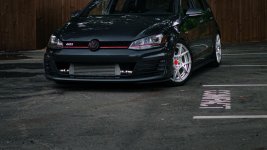
For the 2025 model year, the U.S.-market GTI is available only with the seven-speed DSG.The faster transmission won.
But something was still lost.
When manual and DSG were offered together, buyers could decide what mattered more: outright performance or physical involvement. The existence of both versions also gave the car a broader personality.
Removing the manual doesn’t make DSG worse.
It removes the decision.
And perhaps that is why enthusiasts become most passionate about manual transmissions when manufacturers stop offering them. The gearbox itself may be old technology, but the ability to choose it represented something modern cars increasingly take away: control over how much work the driver gets to keep.
So Which One Is Better?
If the car is a daily driver, spends time in traffic, has significant power or needs to deliver repeatable performance, DSG is difficult to beat.If the car is a weekend escape, lives on interesting roads or exists primarily to make ordinary speeds entertaining, the manual may offer something a stopwatch cannot measure.
The better transmission depends on what you want the car to do for you—and how much of the doing you want to keep for yourself.
DSG makes the car faster.
The manual makes every shift yours.
If both transmissions cost the same and produced exactly the same performance, which one would you choose—and why?
Photography: Cameron Yartz, Enzo Varsi, Dextar Vision and FBO Media via Pexels.